The 5th NTN Workshop, held in Berlin, successfully brought together representatives from mobile and satellite network operators, integrators, technology providers, and academia to discuss the evolution of non-terrestrial networks (NTN) within the emerging 6G landscape. Building on the steady progress from interoperability toward full unification of terrestrial and satellite communication ecosystems, the event provided a timely platform for industry-wide exchange and collaboration.
With 3GPP 6G standardization officially underway, this year’s workshop marked a significant milestone: for the first time, non-terrestrial communication is fully embedded in the standardization process from its inception. This development underscores the accelerating importance of NTN as an integral component of future communication systems.
The workshop program featured a series of technical presentations, expert panels, and live demonstrations, emphasizing the essential roles of newly established laboratory infrastructures, space assets, and cost-efficient testbeds. These resources form the basis for large-scale experimentation and validation activities that will drive forthcoming advances in unified TN-NTN architectures.
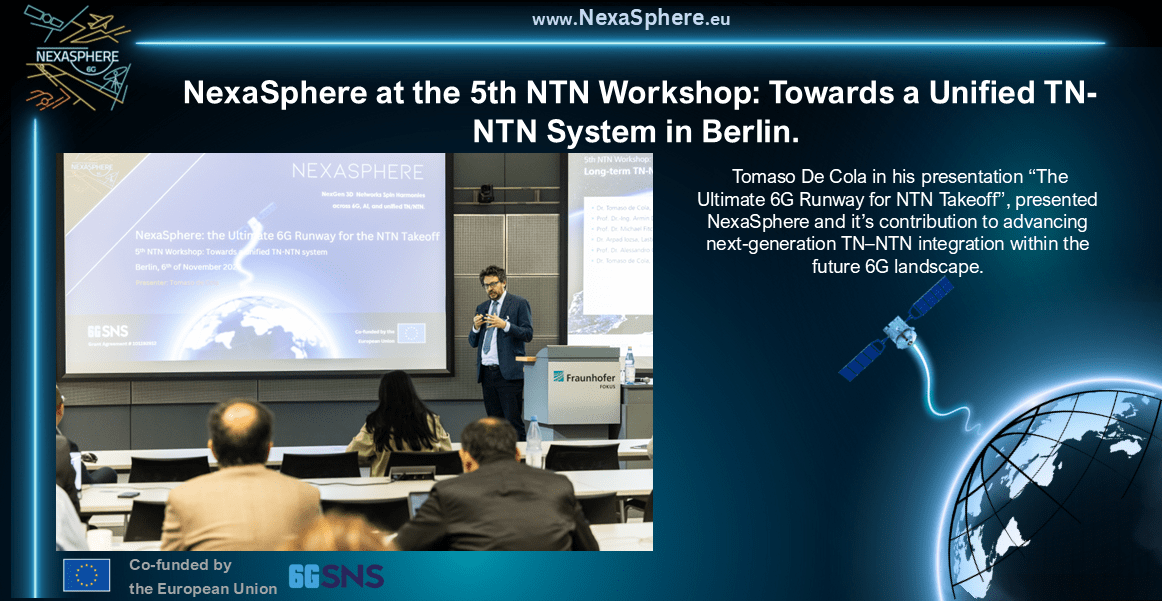
NexaSphere contributed to the event through a presentation titled “The Ultimate 6G Runway for NTN Takeoff,” presented by Tomaso De Cola, highlighting the project’s role in enabling next-generation TN-NTN integration. The discussion focused on how NexaSphere’s developments support seamless harmonization across 4G, 5G, and 6G networks and facilitate broad adoption of unified non-terrestrial technologies.
Recognized as a leading industry forum, the NTN Workshop continues to promote cross-sector collaboration by strengthening the bridge between terrestrial and non-terrestrial domains. This year’s edition further reinforced the momentum created by ongoing 6G and O-RAN standardization efforts, helping shape new ecosystems and accelerate convergence across the communications industry.
Organizers:
Maria Guta (ESA), Adam Kapovits (Eurescom), Marius Corici (Fraunhofer FOKUS)
Further information:
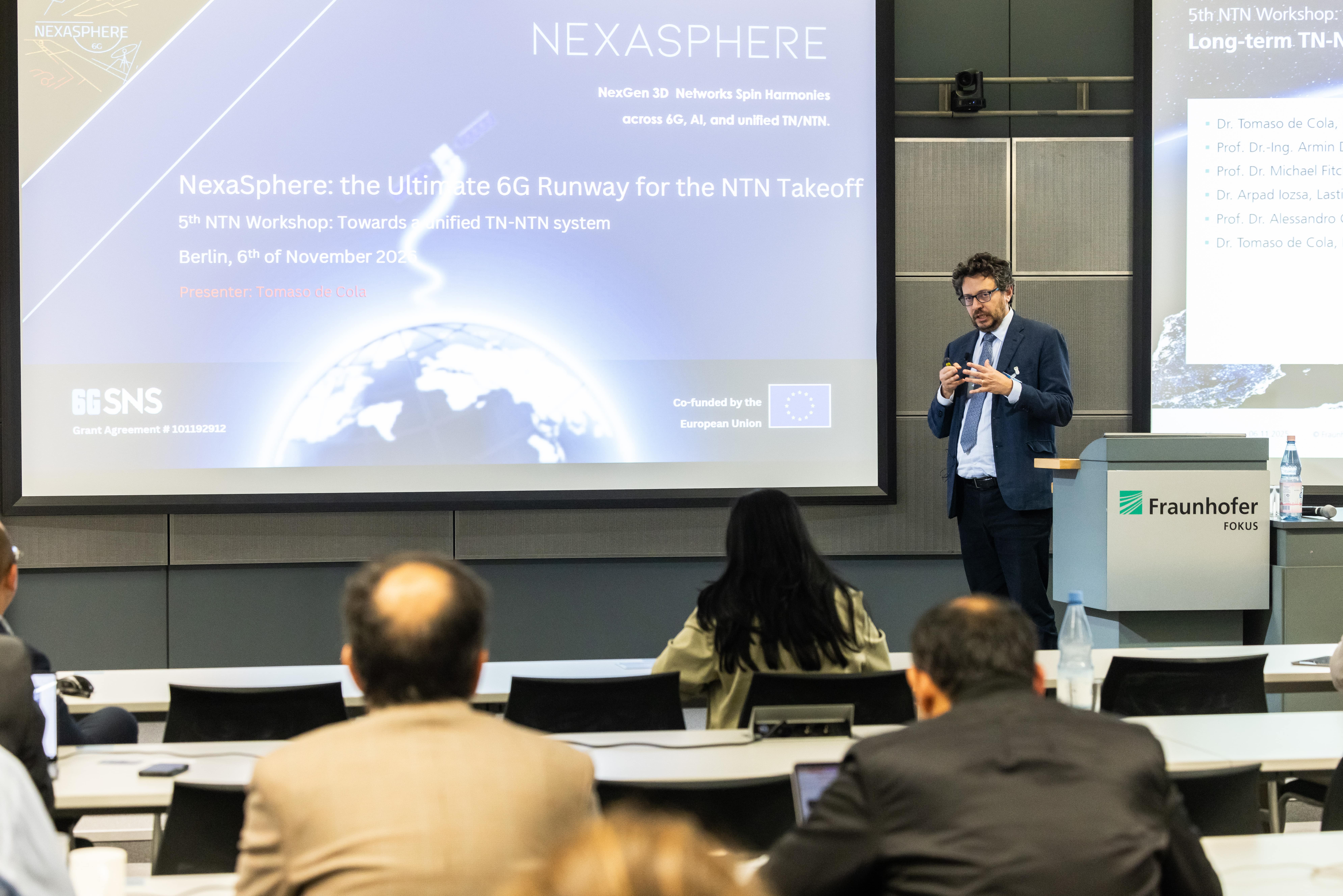
© Fraunhofer FOKUS / Paul Hahn